This triptych uses the three stages of demonic possession as a metaphor for the psychological and spiritual consequences of life lived through digital platforms. The work is not concerned with literal possession, but with the gradual surrender of identity, autonomy, and individuality within systems built around performance, validation, and surveillance. The demon represented throughout the series is not supernatural. It is collective desire. It is commodification disguised as empowerment, surveillance disguised as connection, and profit disguised as freedom. The work examines how these systems capitalize on human vulnerability while encouraging conformity, transforming attention into currency and visibility into a form of psychological violence.

1 invitation
The first image represents invitation. A circle of women dance around a fire, referencing
imagery historically associated with witchcraft, ritual, and communion with unseen
forces. How originally women were labled evil, and punished when they stepped away
from social norms.* Each woman is the same model repeated through montage,
intentionally removing individuality in order to symbolize codification: the narrowing of
beauty, identity, and desirability into a repeated social template manufactured by online
culture. Their white nightgowns function as contradictory symbols of purity, comfort,
intimacy, sexuality, and vulnerability. The garments evoke the emotional relationship
many people have with their phones: private, addictive, ritualistic, and escapist.
Smartphones placed at their feet become offerings and points of contact, signaling the
act of willingly entering digital space without understanding the consequences of the
voices that answer back. Illuminated by the fire, the gowns become partially
transparent, exposing the body beneath them and revealing what these systems
ultimately demand: visibility, exposure, and consumption. The fire itself becomes
desire, ambition, and the longing to be seen.
imagery historically associated with witchcraft, ritual, and communion with unseen
forces. How originally women were labled evil, and punished when they stepped away
from social norms.* Each woman is the same model repeated through montage,
intentionally removing individuality in order to symbolize codification: the narrowing of
beauty, identity, and desirability into a repeated social template manufactured by online
culture. Their white nightgowns function as contradictory symbols of purity, comfort,
intimacy, sexuality, and vulnerability. The garments evoke the emotional relationship
many people have with their phones: private, addictive, ritualistic, and escapist.
Smartphones placed at their feet become offerings and points of contact, signaling the
act of willingly entering digital space without understanding the consequences of the
voices that answer back. Illuminated by the fire, the gowns become partially
transparent, exposing the body beneath them and revealing what these systems
ultimately demand: visibility, exposure, and consumption. The fire itself becomes
desire, ambition, and the longing to be seen.

2 contact
The second image represents contact. A mass of hands reaches toward one of the
women, constructed entirely from repeated images of her own hands. This gesture
reflects the illusion of autonomy within social media culture. The voices that shape,
critique, consume, and manipulate us often emerge through our own participation. The
hands symbolize both the external pressure of digital commentary and the
internalization of those systems into the self. The woman stares into this wave of
reaching limbs with uncertainty while clutching at a gown that is slowly falling apart.
The unraveling garment symbolizes the erosion of innocence, privacy, and selfhood
beneath the pursuit of attention and affirmation. What initially appears as liberation
gradually reveals itself as submission disguised as empowerment.
3 possession
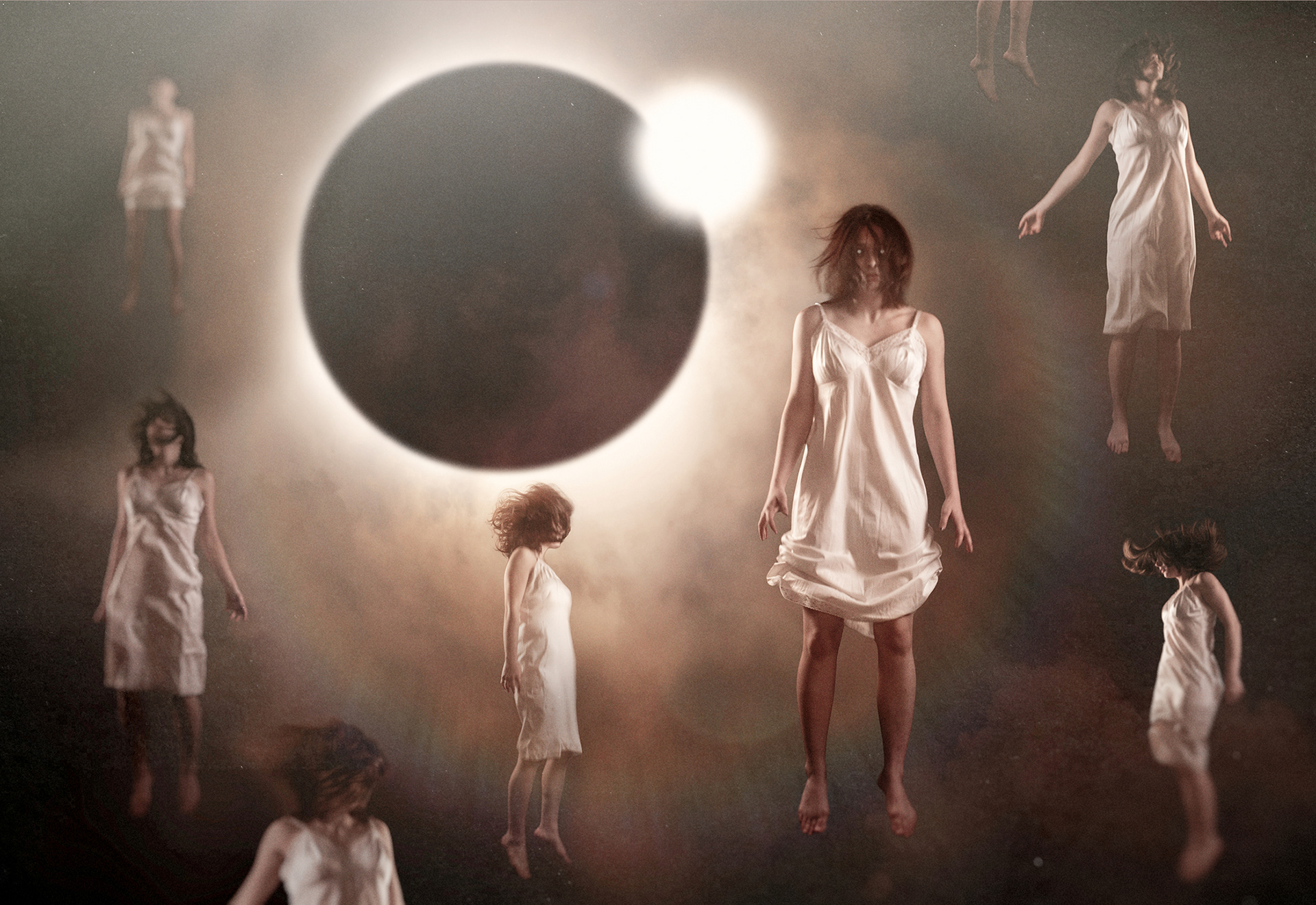
The final image represents possession. The women float in darkness before a massive
eclipse rendered to resemble an eye. The eclipse functions as the gaze of humanity
itself: the collective observer hidden behind platforms, algorithms, trends, and the
machinery of spectacle. This eye symbolizes the true source of corruption within the
series, not technology alone, but the human (MAN) appetite behind it. Fame, desire,
sexuality, and identity become manipulated through systems that reward performance
over authenticity. The women no longer stand grounded within reality but drift
suspended within emptiness, consumed entirely by the forces they once willingly
approached.
The final image represents possession. The women float in darkness before a massive
eclipse rendered to resemble an eye. The eclipse functions as the gaze of humanity
itself: the collective observer hidden behind platforms, algorithms, trends, and the
machinery of spectacle. This eye symbolizes the true source of corruption within the
series, not technology alone, but the human (MAN) appetite behind it. Fame, desire,
sexuality, and identity become manipulated through systems that reward performance
over authenticity. The women no longer stand grounded within reality but drift
suspended within emptiness, consumed entirely by the forces they once willingly
approached.
Throughout the series, the work questions how concepts of good and evil have
transformed within contemporary culture. Here, “good” is not moral perfection but
authenticity, individuality, emotional truth, and connection to self. “Evil” is the surrender
of those qualities in exchange for visibility, validation, and belonging within the mass
consciousness of social media. The project draws parallels to the biblical story of Eden:
the forbidden fruit * an APPLE, a device filled with infinite knowledge yet equally
capable of delivering manipulation, temptation, insecurity, and psychological
fragmentation through the glowing black mirror we willingly place before ourselves
daily.
Ultimately, the triptych is about seduction through illusion. Social media promises
freedom, self expression, empowerment, and connection, yet often demands
conformity, exposure, and self betrayal in return. The work examines how modern
systems of visibility reshape identity while disguising exploitation as liberation, leaving
individuals increasingly disconnected from the values, beliefs, and imperfections that
once made them human.